Client Server Architecture
Server-client architecture is a design model where two entities, a server and a client, interact to perform tasks or exchange information. This model underpins most modern networks, enabling communication between devices and ensuring the efficient delivery of resources and services.
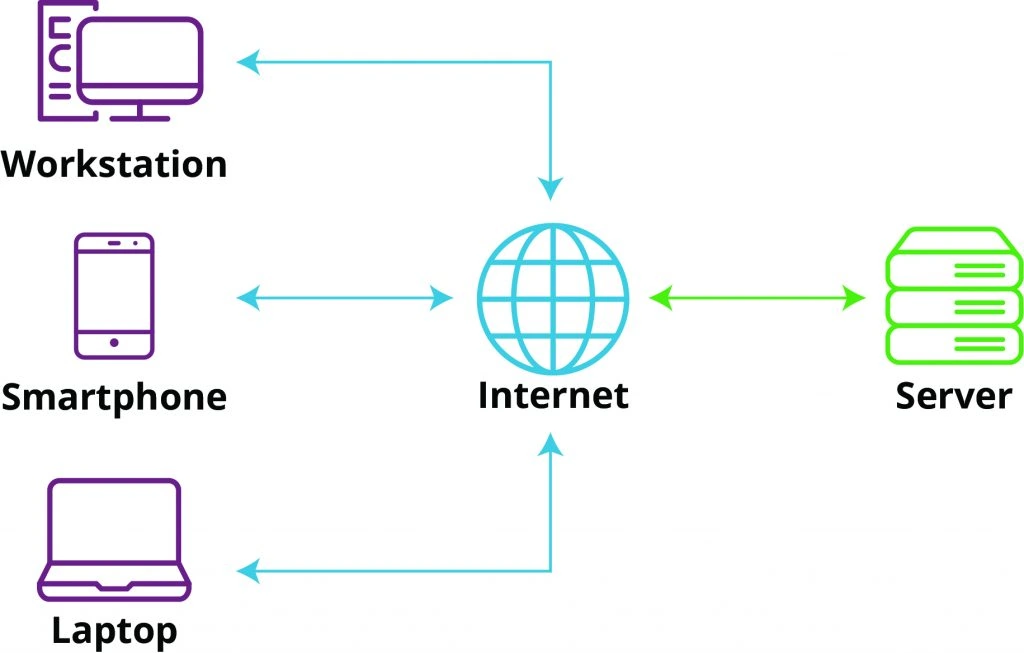
working
Client Sends a Request:
- A client, like a web browser, sends a request (e.g., "Show me the homepage of www.example.com").
Server Processes the Request:
- The server receives the request, processes it, and retrieves the necessary data or resource.
Server Sends a Response:
- The server sends the requested resource (e.g., HTML, images, or files) back to the client.
Client Uses the Response:
- The client processes and displays the response, such as rendering a webpage or showing requested data.
Example
Let’s say a user visits a website:
The client (browser) requests the webpage.
The server hosting the website processes the request and retrieves the HTML, CSS, and JavaScript files.
The client receives these files and renders the webpage for the user.
In conclusion, we can say client-server architecture is the backbone of modern computing and networking. Separating roles between clients and servers, ensures efficient communication, centralized resource management, and seamless scalability, making it ideal for various applications, from websites to cloud-based platforms.